
2026 Glendale Election Wrap-up
The votes are in and we have sent a strong progressive contingent to our local government in Glendale. Seeing the grassroots groups and candidates come together to win with a platform of ensuring the entire community will thrive was a highlight of this election cycle. What felt like lonely work in 2022 has now coalesced into a significant and strong majority in Glendale.
GUSD Parents invested our significant volunteer energy into the following candidates: Aileen Dinkjian, Kathleen Cross, Dan Brotman, and Alek Bartrosouf. We also promoted candidates Ingrid Gunnell, Elen Asatryan, Suzie Abajian, and Edit Khachatryan.
Our five main takeaways from 2026 remain consistent with what we’ve learned since 2022:
More money does not equal more votes.
Volunteers make or break a campaign.
Candidates who have a positive message and emphasize their achievements win.
Establishment endorsements have diminishing returns.
Glendale should move to ranked-choice voting to further increase turnout by allowing voters to rank candidates in order of preference, especially in City Council elections.
1) MONEY ISN’T EVERYTHING
Aileen Orlino Dinkjian spent less than $10,000 on her campaign. She earned over 40% of the vote in a three-way race. She had no significant Independent Expenditures supporting her campaign (Planned Parenthood and PALAD put her on slate mailers and promoted her on social media). Dinkjian was relentless at the doors, a skilled social media user (her paid boosted posts received tens of thousands of impressions in Area D by Election Day), and well-known in her neighborhood and GUSD schools.
Kathleen Cross spent less than $5,000 on her campaign. She earned nearly 60% of the vote in a three-way race. Her smart spending on targeted social media boosts highlighting her achievements and goals had tens of thousands of impressions; a community picnic/food drive served as her campaign outreach.
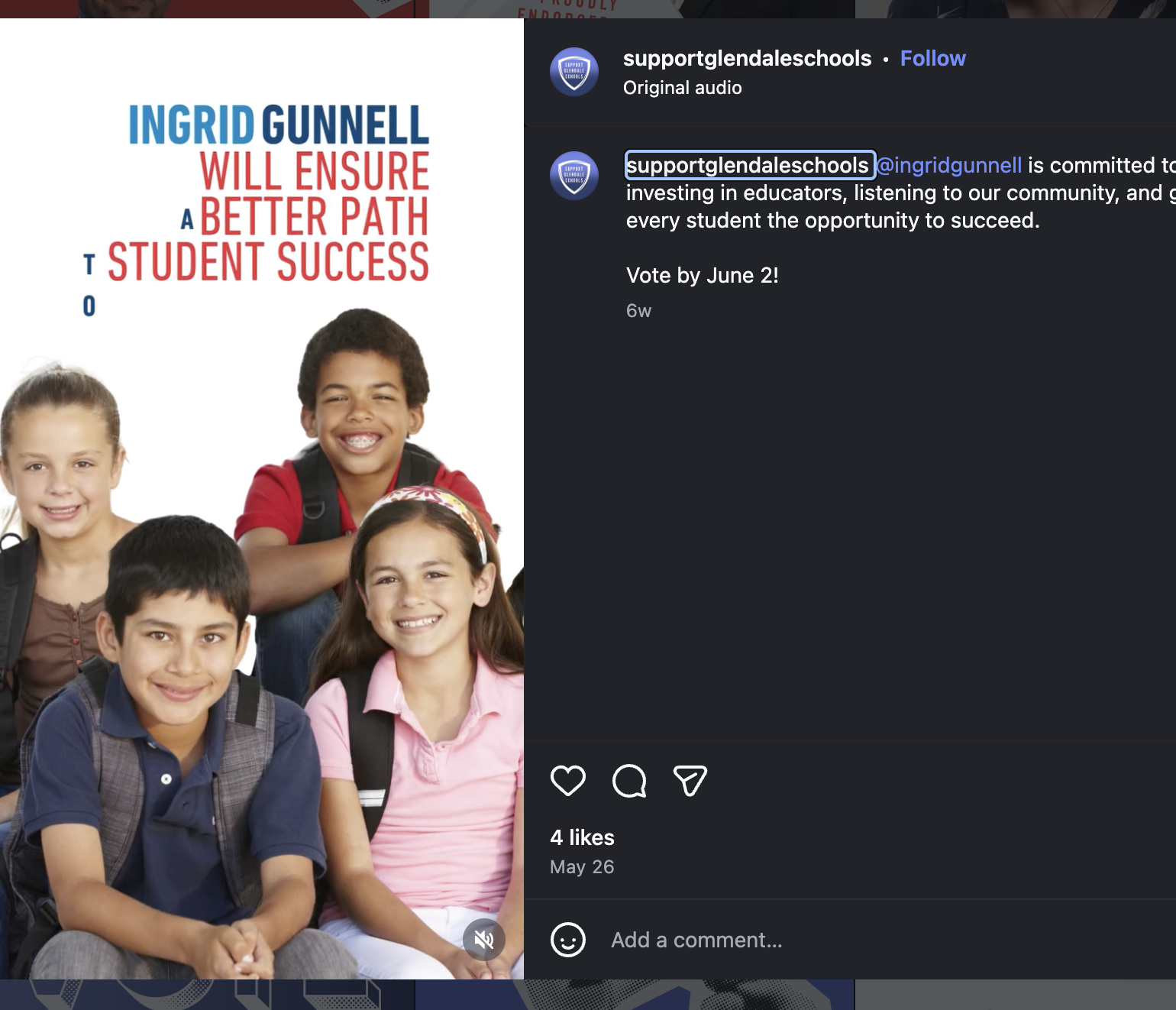
Ingrid Gunnell raised and spent almost $20,000 on her campaign based on public filings. Ms. Gunnell relied on a student volunteer to manage her campaign and a paid consultant (not based in Glendale) for additional input.
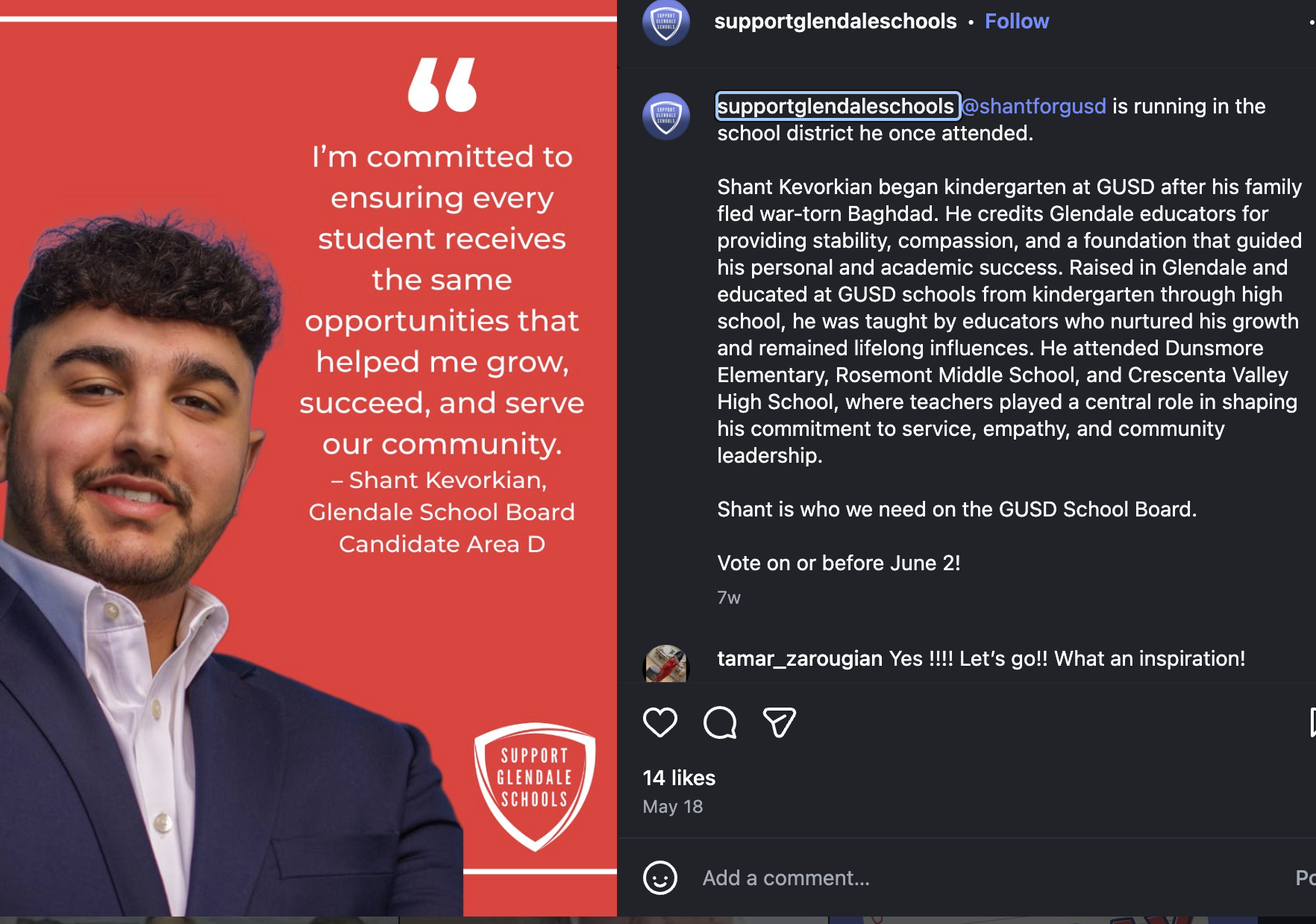
Based on publicly available campaign filings, the Glendale Teachers Association PAC spent over $69,000 on their endorsed candidates. This was an Independent Expenditure, meaning that GTA could not coordinate with Kevorkian/Cross/Gunnell campaigns. The filing shows over $28,000 spent on Shant Kevorkian’s campaign in Area D as of late May. GTA’s PAC spent over $27,000 on Gunnell’s race. Their PAC inundated voters in all three Areas with direct mail and some paid canvassing. The PAC ran bland social media posts that did not appear to micro-target likely voters, spending only $730 on paid social media as of late May’s filing. In the end, Mr. Kevorkian came in third place behind Dr. Dinkjian and a far-right anti-union candidate. GTA spent the least on Ms. Cross’ race (just over $13,000 according to the May 16th PAC filing). Cross had the highest vote total of the three school board races.
2) VOLUNTEERS and SMART FIELD ORGANIZING WIN
Dinkjian and Cross had parent volunteers, student volunteers, and grassroots volunteers spreading the word about their races. Volunteers for Alek Bartrosouf and Dan Brotman also cross-promoted these candidates at the doors and at meet-and-greets. The Dinkjian campaign - aided by deeply experienced GUSD Parent canvassers - knocked over 3000 doors and called a similar number of voters. While Gunnell did have some initial parent support for door-knocking, she lost this support over endorsement choices she made despite the opposition of local queer organizers. GUSD Parents endorsed Aileen Orlino Dinkjian instead of Shant Kevorkian; the usual alliance between GTA and GUSD Parents was missing in this cycle, notably in Gunnell’s race.
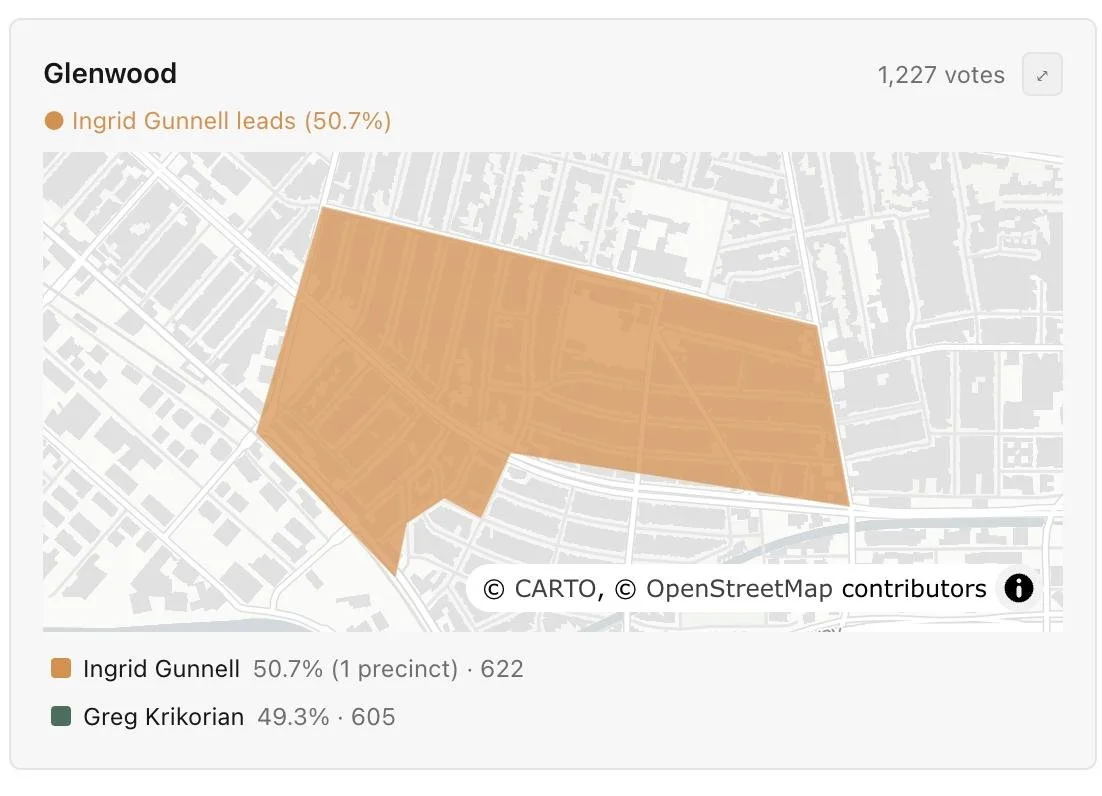
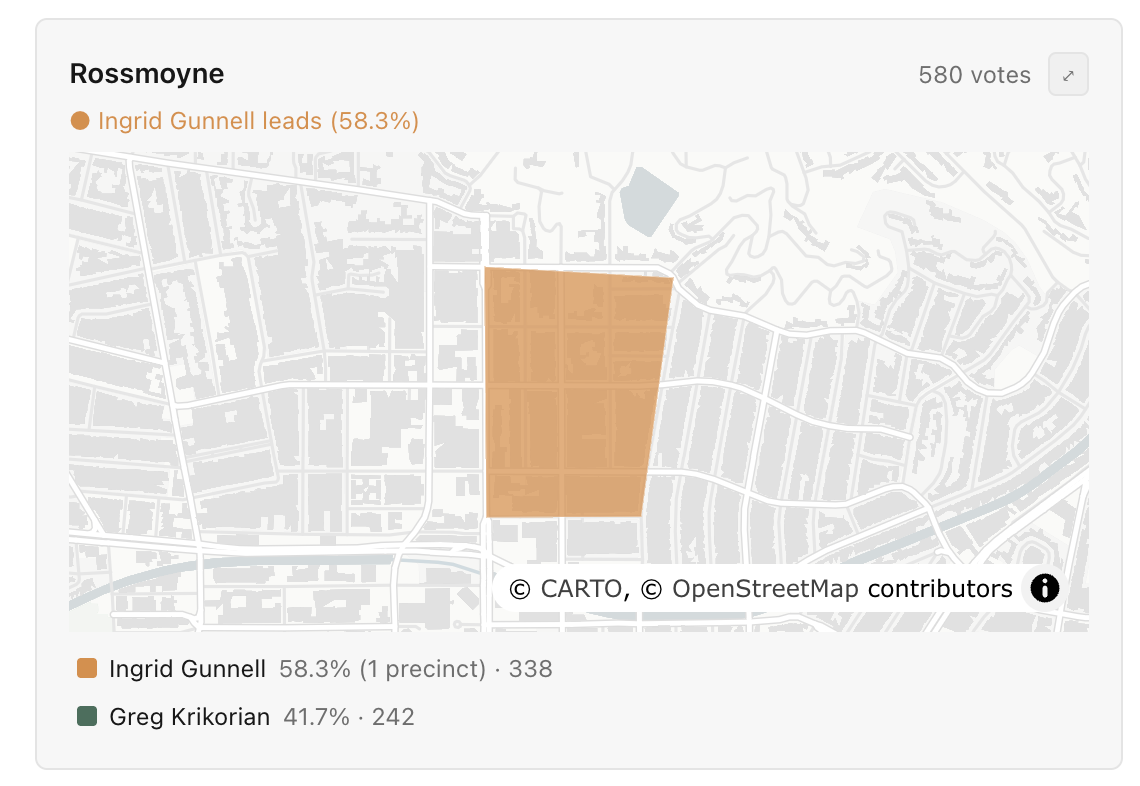
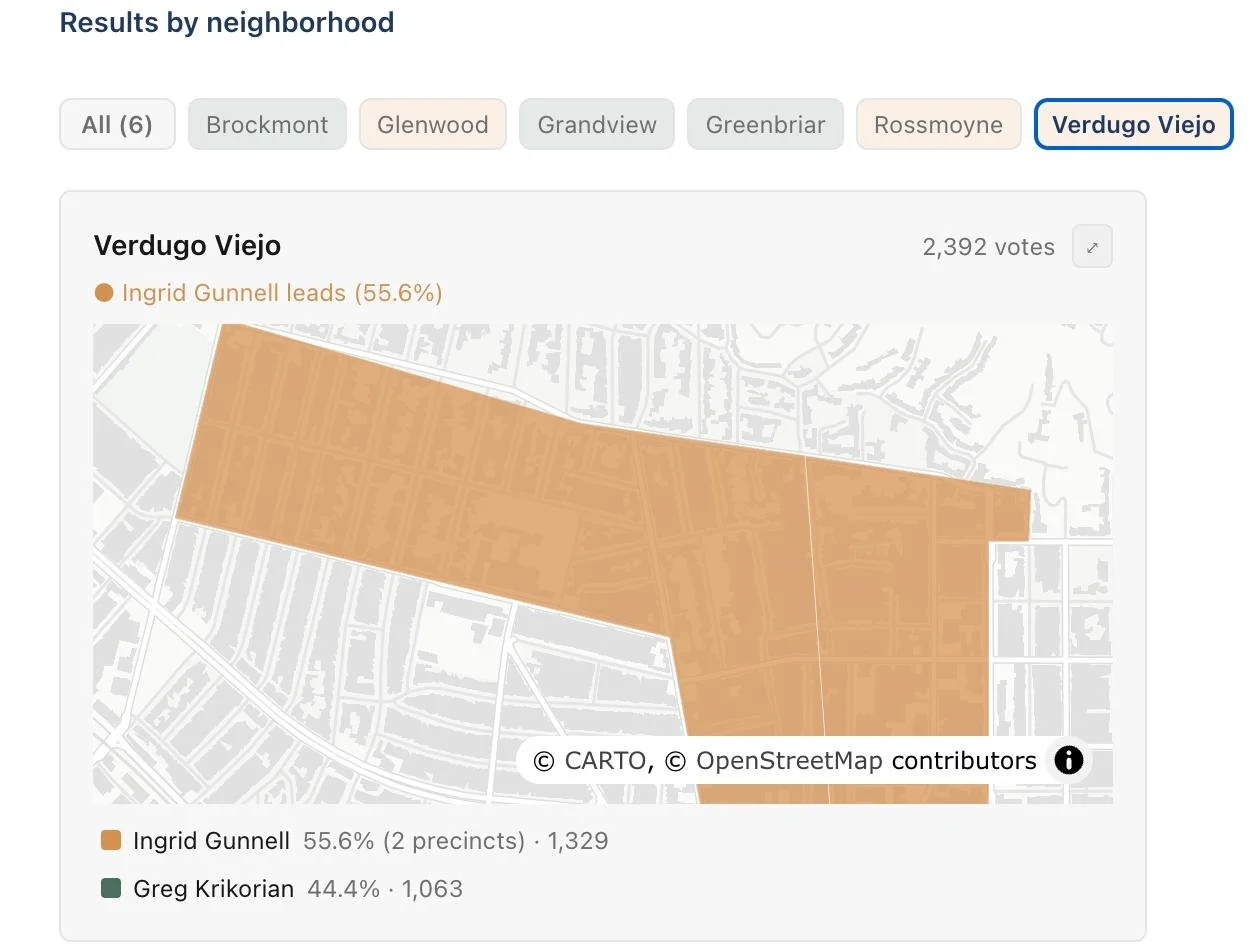
Looking at turnout data that is now available, we can see that Ms. Gunnell would have won had her campaign invested more time in canvassing voters. We can see that in multiple Dem-majority parts of Area B, Gunnell trailed Krikorian by just dozens of votes.
A few more hours of canvassing in the final 2 weeks of the campaign would likely have put her over the top. For example, in the three neighborhoods Gunnell carried, she could have found 18 more votes to win. That’s only about 2-3 hours of canvassing.
3) CANDIDATE QUALITY MATTERS
A longtime resident of Area D who is deeply involved in her local PTA and neighborhood activities, Dr. Dinkjian was clearly the best candidate going into the race. Dr. Dinkjian called voters after work most days, and knocked over 2000 doors on her own time. Dinkjian ran a relentlessly positive campaign and kept her focus on her abundant experience and progressive advocacy. (A memo circulated by the Kevorkian campaign early on urged Dinkjian to drop out of the race to avoid an extremist winning; rumors were spread that Dinkjian herself was somehow a secret extremist. This backfired).
Ms. Cross kept up a robust online presence throughout the past four years and put in a lot of time doing her work for GUSD in Area C and beyond. She regularly advertised her wins as a board member around transparency and budget, and areas she wanted to continue working on (restoring 7th period). Her paid social media ads during her campaign put her in front of Area C voters. Brotman and Bartrosouf volunteers shared a voting guide at doors with Cross on it.
Ms. Gunnell’s campaign message focused on dangers and risks; at voter outreach events she kept reminding people of ongoing lawsuits involving the District and child sexual abuse (most of which predated her time on the board, a fact she could have highlighted since her opponent served over 20 years as a GUSD Trustee). Gunnell did not talk about her major achievements in a clear or consistent way. Her campaign did not do any paid social media advertising. Brotman and Bartrosouf volunteers’ progressive voting guide had Gunnell on it.
4) ENDORSEMENTS ARE NOT EVERYTHING
While Dem organizations and organized labor have long tended to act as kingmakers in local politics, that simply is no longer the case. Up close, the endorsement process appears to include a lot of behind-the-scenes wheeling and dealing among organization leaders. The GTA PAC lost two of their three GUSD races in 2026. EAPD volunteers were nowhere to be found in the field for their candidates Ms. Gunnell and Ms. Cross, despite endorsing both very early on. EAPD should not be taking credit for wins they have nothing to do with - this election cycle is no different.
Clubs often endorse candidates during weekday evening meetings, and require paid memberships for a certain length of time before a member can vote for endorsements. In most cases, just a few dozen members are voting on an endorsement that is then portrayed as indicative of broader membership support. Either way, many voters are tuning out. A knock at the door beats a logo on a candidate’s website. (To the point: Greg Krikorian eked out a win despite very few endorsements. We are still looking into whether their were PAC funds spent on his behalf, but he did not raise that much more money than Gunnell).
5) RANKED CHOICE VOTING NOW
The more progressive slate of Brotman, Bartrosouf and Asatryan won largely because the rightwing diluted their votes by having too many candidates in the race. Future concerns could be alleviated by ranked-choice voting, in which voters rank their candidates on the ballot. This has the added bonus of often improving turnout, as voters can strategically rank their candidates. We hope our new city council seriously considers amending the city charter to do this.